Buildings, Made Better in a Factory
Precast concrete components, cast under controlled conditions, checked before they leave, and delivered ready to rise.
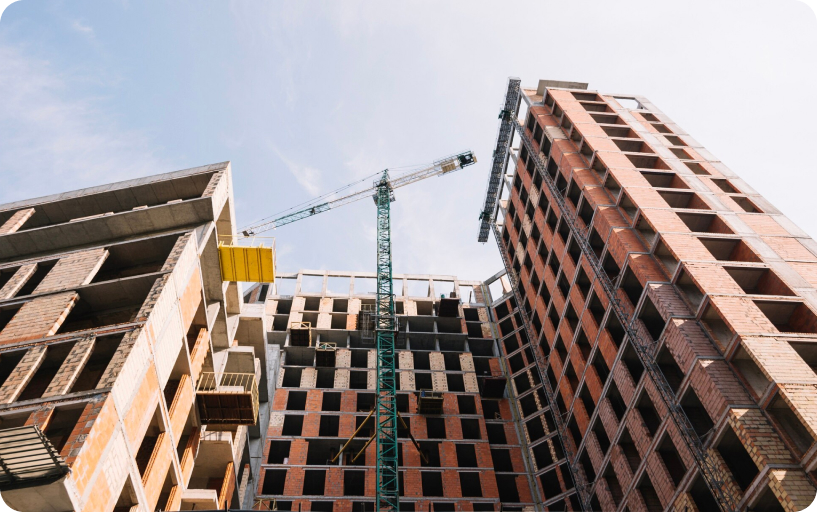
About the Factory
A Factory,
Built for Buildings
Walls, slabs, staircases, beams. On a conventional site, each one is formed, poured and cured where it stands, and every delay ripples into the next.
Our precast factory changes that sequence. Design, engineering and production sit under one roof, so components are made in parallel with site work rather than after it. What arrives on site is finished, inspected and ready to install.
The result is a building process that is calmer, more predictable and far easier to plan.
Manufacturing Technology
Machines Handle the Repetition. Engineers Handle the Judgement.
Precast works because it combines two strengths. Machinery delivers the same result every time, and engineers decide what that result should be. Every component starts from an approved drawing. From the mould to the casting bed to the lifting crane, each stage is planned in advance and repeated with discipline. That is how a thousandth panel comes out just like the first.
The Manufacturing Process
Six Steps. No Shortcuts.
Every component we make follows the same journey from bare mould to finished piece.
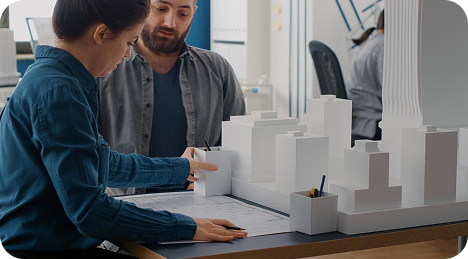 Step 01
Mould Preparation
Moulds are set to the exact shape and dimensions of the component.
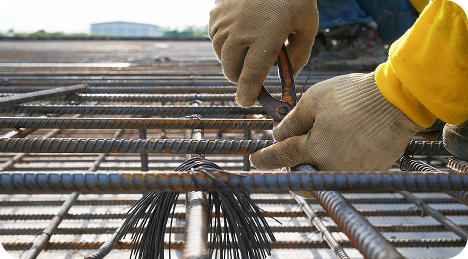 Step 02
Reinforcement and Embeds
Steel and embedded fittings go precisely where the drawings say.
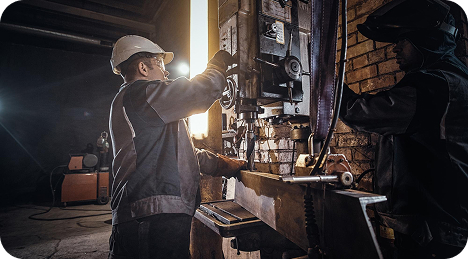 Step 03
Casting
Concrete is placed under controlled conditions, not open skies.
 Step 03
Casting
Concrete is placed under controlled conditions, not open skies.
Quality and Precision
Checked Here, So It Isn’t
Questioned There.
On a traditional site, problems are often found after the concrete has set, when fixing them is costly and slow. In a factory, we find them first.
Raw materials are verified before production. Dimensions are checked during it. Finished components are inspected after it. Quality is a habit built into every shift, not a final checkpoint.


From Factory to Site
Made Here.
Placed There. On Schedule.
A precast component is only as useful as its arrival time. That is why production is planned around the site, not the other way round.
Once a component is approved for dispatch, it is transported to the project and installed according to the approved construction method. The factory and the site work as one team, following one schedule.
Advantages of Precast
Why Build This Way
Building Tomorrow
The Next Building Is
Already Taking Shape.
Somewhere on our factory floor, a wall is curing, a slab is being inspected and a staircase is ready to ship. This is how Suraksha builds: with planning, precision and purpose, one component at a time.